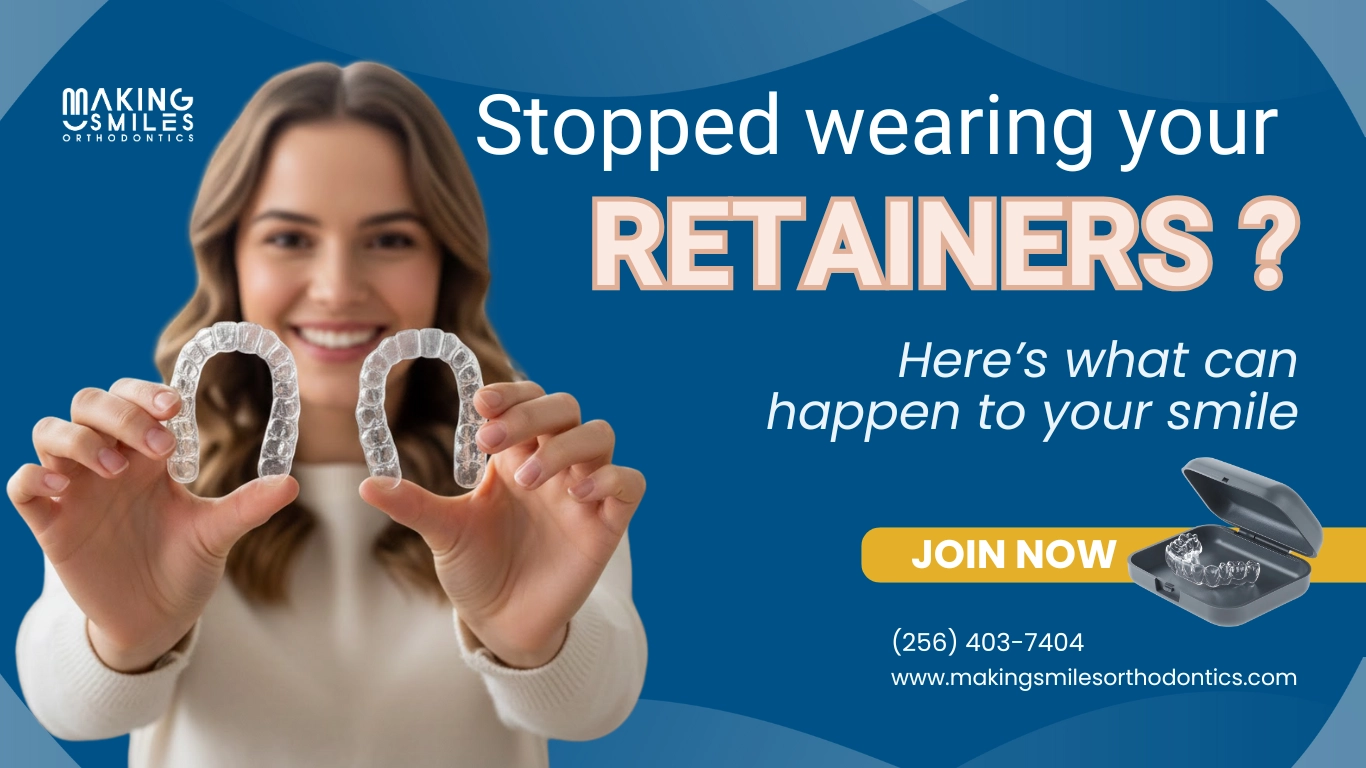
Here’s What Can Happen to Your Smile
Completing orthodontic treatment is a huge milestone, but keeping your smile straight doesn’t end when the braces come off. One of the most common mistakes patients make after orthodontic care is stopping the use of retainers too soon. At Making Smiles Orthodontics in Madison, AL, led by Dr. Sydney Simpson, we believe education is key to maintaining long-lasting results and a confident smile.
Retainers play a critical role in protecting the alignment achieved with braces or aligners. Whether you used traditional braces or clear aligners, dental retainer and retainer braces care is essential to prevent teeth from shifting back to their original positions.
What Happens If You Stop Wearing Your Retainers?
Teeth have memory. After orthodontic treatment, they naturally try to move back to where they were before. This process is known as orthodontic relapse. When retainers are not worn as recommended, teeth can gradually shift, leading to crowding, spacing, or bite changes.
The changes don’t usually happen overnight, which is why many patients don’t notice the early signs. Over time, however, even small movements can affect the overall balance and appearance of your smile. The good news is that wearing your retainer as instructed helps maintain the hard work already done—without stress or discomfort.
How Long Do You Need to Wear Retainers?
One of the most searched questions online is: How long do you have to wear retainers? The answer depends on each patient, but there are general guidelines most orthodontists follow.
Typically, retainers are worn full-time for the first few months after braces are removed. After that initial phase, many patients transition to nighttime-only wear. In many cases, orthodontists recommend wearing retainers at night indefinitely to maintain alignment.
At Making Smiles Orthodontics, Dr. Sydney Simpson customizes retainer recommendations based on each patient’s orthodontic history, bite, and lifestyle. This personalized approach ensures comfort and long-term success.
Types of Dental Retainers
Understanding the different types of retainers helps patients feel confident about their orthodontic care. There are three main types of dental retainer and retainer braces options commonly used today.
- Removable clear retainers are popular because they are discreet and comfortable. They are similar in appearance to clear aligners and are easy to clean.
- Hawley retainers, made of acrylic and wire, are durable and adjustable.
- Fixed or bonded retainers are attached behind the teeth and provide continuous support without daily removal.
Each option has its advantages, and the best choice depends on your specific needs. Dr. Sydney Simpson will help determine the ideal retainer type to protect your smile long-term.
Why Retainers Are Just as Important as Braces
Braces straighten teeth, but retainers keep them straight. Think of retainers as the final step in orthodontic treatment, not an optional accessory. Skipping this step can undo months or years of orthodontic progress.
Retainers help stabilize teeth while surrounding bone and tissue adapt to the new alignment. This stabilization phase is crucial for maintaining a healthy bite and preventing future orthodontic concerns.
Signs You May Need to Start Wearing Your Retainer Again
If your retainer feels tight or no longer fits comfortably, that’s often an early sign of tooth movement. Mild pressure usually means the retainer is guiding teeth back into position, which is a positive thing when addressed early.
If you’ve stopped wearing your retainer and notice changes in your smile, scheduling a consultation sooner rather than later can help preserve alignment without major intervention.
Protecting Your Smile for the Long Term
Consistency is the key to long-lasting orthodontic results. Wearing your retainer as instructed, storing it properly, and attending follow-up visits all contribute to maintaining a healthy, confident smile.
If you have questions about retainers, types of dental retainers, or how often you should be wearing yours, Making Smiles Orthodontics in Madison, AL is here to help. Contact our office at (256) 403-7404 to schedule an appointment with Dr. Sydney Simpson and ensure your smile stays just the way you love it.
FAQs About Retainers
What happens if I stop wearing my retainer?
Teeth may slowly shift back, affecting alignment and bite.
How long should retainers be worn after braces?
Most patients wear them full-time at first, then nightly long-term.
Are clear retainers as effective as traditional ones?
Yes, when worn consistently and properly maintained.
Can retainers fix small tooth movements?
In early stages, retainers can help guide minor shifts.
Do fixed retainers require special care?
Yes, good oral hygiene and regular checkups are essential.