A baby tooth that gets knocked out, removed because of decay, or lost after an infection can create an anxious moment for any parent. The short answer is that some children need a space maintainer for child treatment, but not every early tooth loss calls for one.
The decision depends on which tooth is missing, your child’s age, the condition of nearby teeth, and when the permanent tooth is expected to come in. At Making Smiles Orthodontics, Dr. Sydney Simpson often finds that parents don’t realize space maintainers are an option after early tooth loss. That is why we make education part of every conversation about a developing smile.
My Child Lost a Baby Tooth Early: Do They Need a Space Maintainer?
A space maintainer is not automatically needed when a baby tooth falls out early. Some children are already close to the normal eruption time for the permanent tooth, so the gap may remain open naturally. In other cases, especially after the early loss of a baby molar, nearby teeth may begin moving into that open space.
Dr. Sydney Simpson looks at the whole picture before recommending treatment. We consider the missing tooth’s location, your child’s bite, existing crowding, remaining jaw growth, and the position of the developing permanent tooth. An exam may include X-rays to check eruption timing, bone health, and whether permanent teeth are moving into the right position.
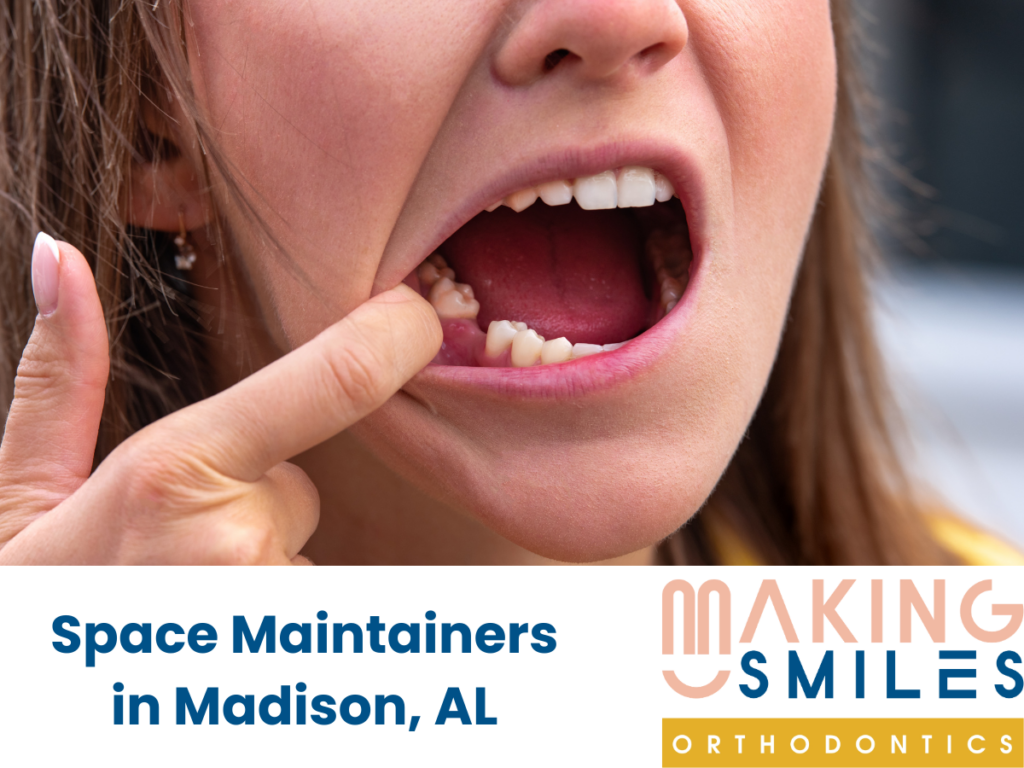
Parents should not wait until crowding is visible. By that point, the open space may already be smaller. Our guide to children’s space maintainer care can help you understand how these appliances protect room for permanent teeth.
What Changes the Recommendation?
Several details affect whether a space maintainer is the right choice:
- A back baby tooth often needs more attention than a front tooth because molars help hold space for future teeth.
- A younger child has more time before permanent teeth erupt, which can create more opportunity for shifting.
- Existing crowding, thumb-sucking, tongue habits, decay, trauma, or infection may affect the treatment plan.
- If the permanent tooth is close to erupting, Dr. Simpson may recommend careful observation instead of an appliance.
Every child’s dental development follows its own timeline. A personalized orthodontic evaluation gives you clear answers without guessing.
What Happens if the Gap Is Not Preserved?
Baby teeth do more than help children chew and speak comfortably. They also act as placeholders for permanent teeth. When one is lost too early, the teeth beside the empty area may drift, tip, or rotate into the gap.
That movement can leave too little room for the permanent tooth. It may come in crooked, become blocked beneath the gums, or contribute to crowding and bite changes. A clinical review of orthodontic space management describes why careful monitoring and the right appliance can help manage these risks after premature tooth loss.
Not every unprotected gap becomes a problem, but it is easier to protect space early than to regain it after surrounding teeth have moved.
When space is lost, later braces or other orthodontic treatment may be more involved, take longer, or cost more. Outcomes vary from child to child, so there is no reason to panic. Prompt care gives Dr. Simpson the chance to identify concerns while treatment options are still simple and comfortable.
A space maintainer guides development, but it does not replace routine dental care. Healthy gums, regular cleanings, and consistent checkups all matter as your child’s smile changes.
Why Follow-Up Matters as the Mouth Grows
A space maintainer needs professional checks over time. The jaw grows, teeth shift, and permanent teeth continue developing beneath the gums.
Dr. Simpson may use periodic X-rays to track eruption and check the appliance’s fit. We also watch for plaque buildup around bands or wires, gum irritation, and signs that the permanent tooth is ready to come in. The appliance can then be adjusted or removed at the appropriate time.
Which Type of Space Maintainer Might a Child Need?
The best appliance depends on the missing tooth, your child’s dental development, and the amount of space that needs protection. Fixed appliances attach to nearby teeth and stay in place. Removable appliances are taken out for cleaning only when Dr. Simpson recommends that option.
Band and Loop, Distal Shoe, and Lingual Arch Appliances
A band and loop is a small metal loop connected to a nearby tooth. It is often used when one baby molar is missing.
A distal shoe may be considered when a back baby molar is lost before the first permanent molar has erupted. This appliance requires close monitoring because it guides the erupting molar into position.
A lingual arch connects to lower back teeth and helps preserve space on both sides of the lower jaw. It may be helpful when several lower baby teeth are missing.
Nance and Other Bilateral Space Maintainers
A Nance appliance is commonly used in the upper jaw when space needs protection on both sides. Its design rests against the palate for added support.
Parents do not need to choose an appliance themselves. Dr. Simpson will recommend the safest and most effective design after examining your child’s teeth, bite, and X-rays.
How Long Will a Child Wear a Space Maintainer?
Wear time varies widely. Some children need an appliance for several months, while others wear one for a few years. The biggest factors are how early the baby tooth was lost and when the permanent tooth is expected to erupt.
The appliance is usually removed when the permanent tooth is ready to come in. It may also need attention sooner if it becomes loose, bent, broken, or uncomfortable. Avoid sticky candies and hard foods, brush carefully around bands and wires, and call our office if your child feels pain or notices damage.
Space Maintainers in Madison, AL: Cost, Appointments, and Next Steps
The cost of space maintainers in Madison, AL depends on the appliance type, the number of teeth involved, X-rays, follow-up visits, and your insurance benefits. During a consultation, we can discuss coverage, payment options, and the full treatment plan before care begins.
Making Smiles Orthodontics provides personalized guidance for families who need space maintainers in Madison, AL. Call us at 256-403-7404 to schedule an appointment with Dr. Sydney Simpson. A prompt evaluation does not always mean your child will need an appliance, but it can help protect their developing smile.
A Healthy Space for a Growing Smile
An early lost baby tooth may need a space maintainer, but only an orthodontic evaluation can show whether preserving that gap is important. Early assessment can reduce the risk of shifting, crowding, and eruption concerns.
With regular monitoring, thoughtful care, and a personalized plan, we can help your child maintain room for a healthy, confident smile. Contact Dr. Sydney Simpson and Making Smiles Orthodontics at 256-403-7404 or schedule a free consultation for guidance tailored to your child.